Cupping, Crowning and Lifting Boards After a Leak
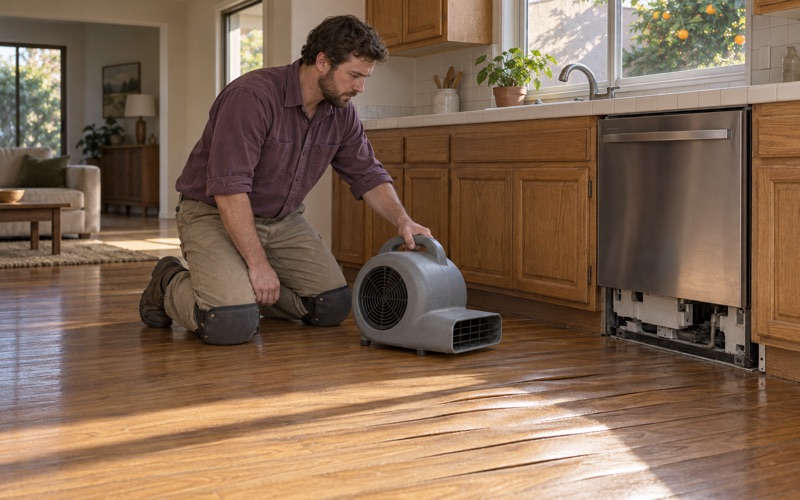
Cupping is when board edges rise above the centers, crowning is the reverse, and buckling is when boards lift off the subfloor entirely. All three usually trace back to water. We find the source and take moisture meter readings before deciding whether the boards can dry flat or have to be replaced.
Slab Leaks Under a Wood Floor
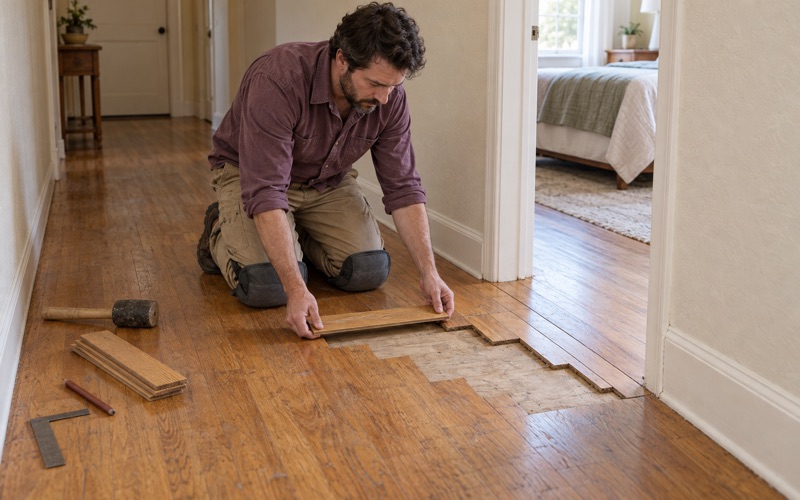
A warm spot underfoot on a slab house can mean a hot water line leaking inside the concrete. The wood above it swells, cups and darkens long before water shows at the surface. We map the wet area with a meter, and once the plumber has repaired the leak we replace only the boards that need it.
The order matters because a slab holds water for a long time after the pipe is fixed. We keep taking readings until the concrete under the damaged area comes back within the flooring maker’s limits, and only then do new boards go down, so the repair does not cup the same way the original floor did.
Hollow or Popping Glue-Down Floors
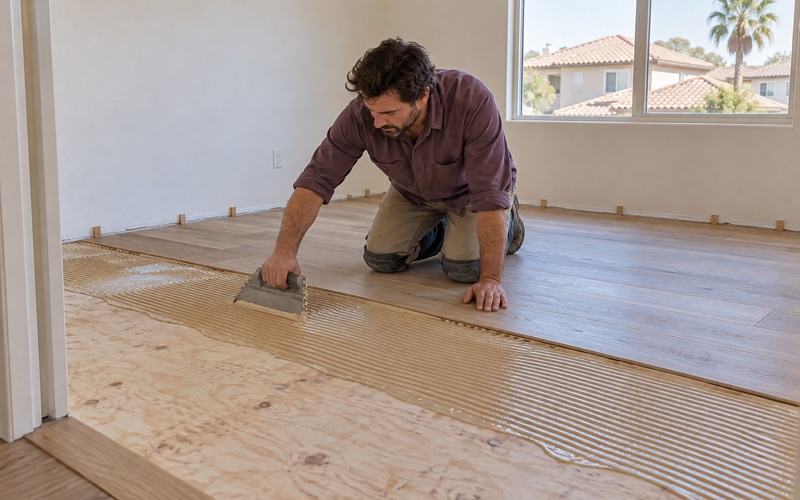
An engineered floor that sounds hollow or pops underfoot has usually lost its bond to the slab. Common causes are too little adhesive, a slab that was not flat, or moisture that broke the bond. We tap out the hollow spots, then either inject adhesive or lift and reset the affected boards.
Seasonal Board Gapping
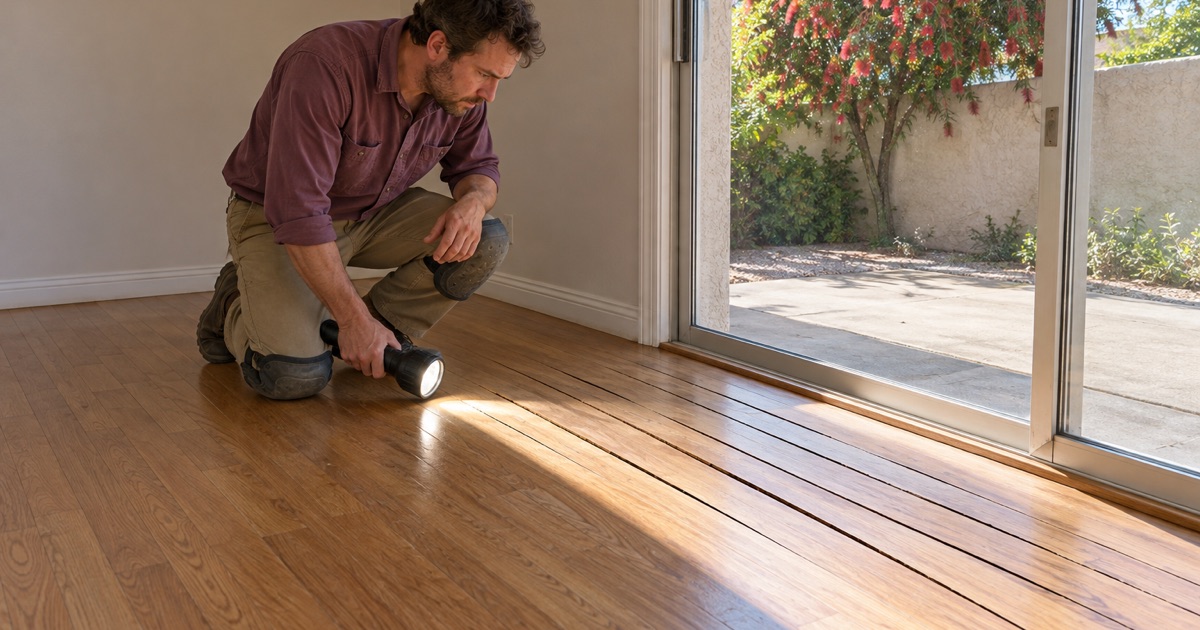
Wood shrinks when indoor air dries out and swells again when it gets humid, so gaps that open and close with the seasons are normal movement. Gaps that stay open all year, or keep widening, point to a subfloor or moisture problem. We tell the two apart before recommending filler or board work.
Filling seasonal gaps is usually a mistake, because the filler cracks out or crushes when the boards swell again. For those floors we advise steadier indoor humidity instead. Where the gaps are permanent, we may fill them, replace narrow runs of boards, or correct the subfloor that let them open.
Drywood Termite Frass and Boring Holes
Small pellets collecting along a baseboard are drywood termite frass, and tiny round holes in the boards can mean powderpost beetle. We stop and tell you before sanding, because refinishing over active insects only hides the damage. Once the infestation is treated, affected boards are cut out and replaced.
Black Pet Urine Stains
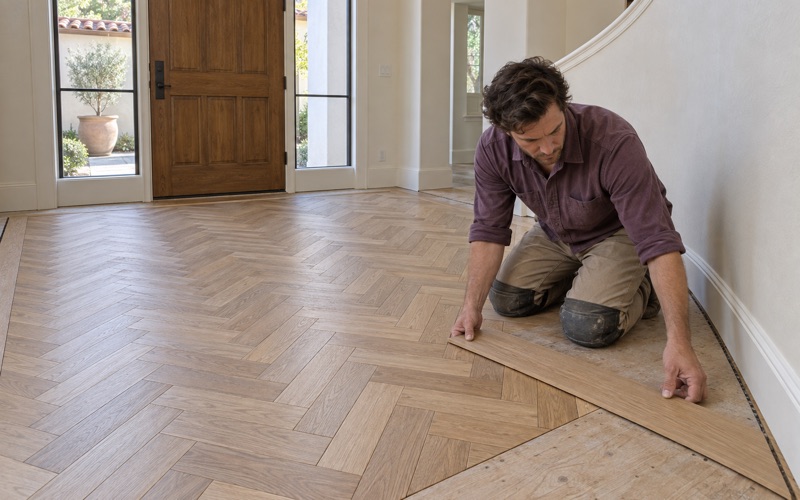
Pet urine stains start pale, then turn gray and black as they soak into the wood fibers. Light stains can sometimes sand out, but black ones usually run too deep. We test a stained area first, and where the mark stays, we replace those boards and weave the new ones into the old.
Delaminating Engineered Boards
When the top layer of an engineered board peels, splinters or separates from the core, the bond between the wear layer and the plywood core or HDF core has failed. Heat, moisture and poor-quality product are the usual causes. We replace the failed boards and look for the condition that caused it.
Squeaks and Soft Spots Over Joists
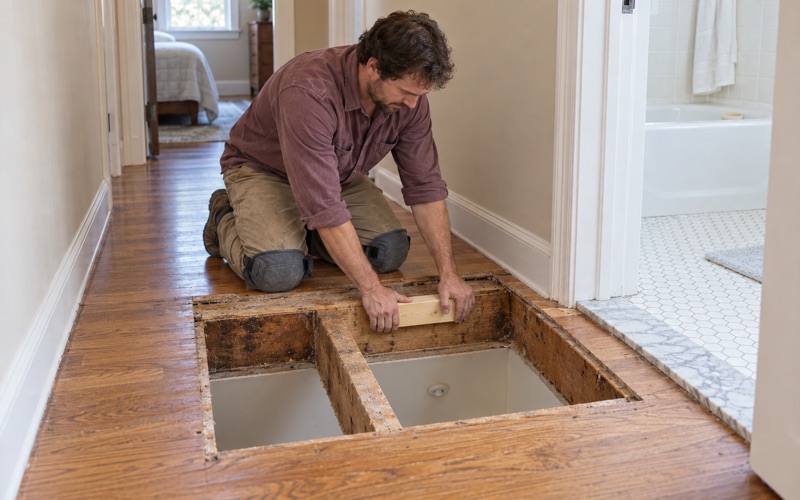
In a house with a raised floor, a squeak usually means loose fasteners or boards rubbing, while a soft spot can mean damaged subfloor or a weakened joist. We find the cause from below where we can reach it, then refasten, shim or repair the subfloor before any refinishing happens.